(Two beings from here, two ancient gods. They were in my room; I lived with them.

For an instant, I joined in their dialogue. They were not surprised. 'Who are you? One of the new gods?' – 'No, no, just a man'. But my denial did not stop them. 'Ah, the new gods! They have finally come'. 

Their curiosity was light, capricious, wondrous. 'What are you doing here?' I answered them. They did not listen to me. They knew everything; theirs was a light knowledge that could not be weighed down with the kind of partial truth that I gave to them[…]

We have been living together ever since. And I almost no longer resist the idea that one day I may be the new god.) […]

Blanchot, Awaiting Oblivion

If I had to cite texts that evoke what committed literature might have been, I would have found them in the ancient period, when literature did not exist. The first, the one closest to us, is the biblical story of Exodus. Everything can be found there: liberation from slavery, wandering in the desert, waiting for writing, that is, for legislative writing, of which one always falls short, so that the only tablets received are broken, ones that cannot make up a complete response except in their breaking, even their fragmentation; finally, the necessity of dying without completing the work, without attaining the Promised Land, which, however, insofar as it is inaccessible, is always hoped for and thus already given. 

Blanchot, 'Refusing the Established Order', Political Writings

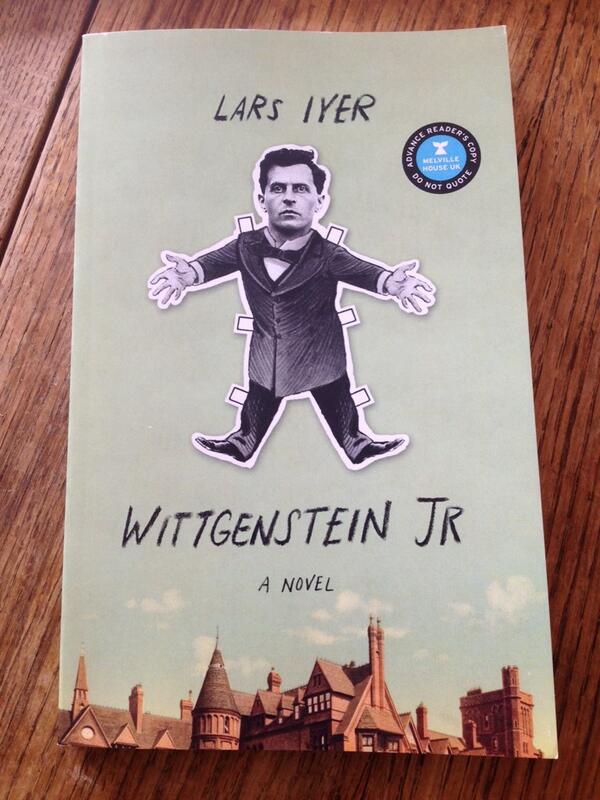
Spurious the blog, Spurious the book, being taught on the MA course Theatre, Film & Media at the English Institute of the University of Lodz

Presently
our infantry also was left unsupported, while the different companies became so
huddled together that a soldier could hardly draw his sword, or withdraw his
hand after he had once stretched it out. And by this time such clouds of dust
arose that it was scarcely possible to see the sky, which resounded with
horrible cries; and in consequence, the darts, which were bearing death on
every side, reached their mark, and fell with deadly effect, because no one
could see them beforehand so as to guard against them.

But when
the barbarians, rushing on with their enormous host, beat down our horses and
men, and left no spot to which our ranks could fall back to deploy, while they
were so closely packed that it was impossible to escape by forcing a way
through them, our men at last began to despise death, and again took to their
swords and slew all they encountered, while with mutual blows of battle-axes,
helmets and breastplates were dashed in pieces. Then you might see the
barbarian towering in his fierceness, hissing or shouting, fall with his legs
pierced through, or his right hand cut off, sword and all, or his side
transfixed, and still, in the last gasp of life, casting round him defiant
glances. The plain was covered with carcasses, strewing the mutual ruin of the
combatants; while the groans of the dying, or of men fearfully wounded, were
intense, and caused great dismay all around.

Amidst
all this great tumult and confusion our infantry were exhausted by toil and
danger, until at last they had neither strength left to fight, nor spirits to
plan anything; their spears were broken by the frequent collisions, so that
they were forced to content themselves with their drawn swords, which they
thrust into the dense battalions of the enemy, disregarding their own safety,
and seeing that every possibility of escape was cut off from them. The ground,
covered with streams of blood, made their feet slip, so that all they
endeavored to do was to sell their lives as dearly as possible; and with such
vehemence did they resist their enemies who pressed on them, that some were
even killed by their own weapons. At last one black pool of blood disfigured
everything, and wherever the eye turned, it could see nothing but piled up
heaps of dead, and lifeless corpses trampled on without mercy.

The sun being now high in the heavens, having
traversed the sign of Leo, and reached the abode of the heavenly Virgo,
scorched the Romans, who were emaciated by hunger, worn out with toil, and
scarcely able to support even the weight of their armor. At last our columns
were entirely beaten back by the overpowering weight of the barbarians, and so
they took to disorderly flight, which is the only resource in extremity, each
man trying to save himself as well as he could.

Ammianus Marcellinus, The Battle of Hadrianopolis

We believe ourselves to understand things
first when we have reduced them to what we do not understand and cannot
understand – to causality, axioms, God, character.

Not what lies behind the scientific image of
things – what is obscure, what is in itself and what is incomprehensible – lies
beyond all knowledge; but conversely it is the immediate, the sensual image,
the surface of things that face us that eludes us.

We wander and reach the goal – but, given
the relativity of all movement, who knows if we are not standing still and the
goal is coming to us. This would presuppose a movement of the objective world
of ideas. But on this ambiguity rests a lot of religious faith.

Art is our thanks to the world and to life.
After both have created the sensuous and spiritual forms of cognition of our
consciousness, we thank them by, once again with their help, creating a world
and a life.

Perhaps it is not just due to the stage of
humanity we are in, that it comes up with the highest problems, but not the
highest solutions. Perhaps it is humanity’s inner necessity, the essence of
man. The apple from the tree of knowledge was unripe.

When man describes himself as a fragment,
not only does he mean that he has no whole
life, but more profoundly, that he has no whole life.

That man is a being who can reach the
ultimate problems but not the ultimate solutions has to do with the fact that
he has to act as if he knew the future –although he does not know even one step
of it for sure.

How deep is mankind’s destiny embedded in
the fact that its two highest ideas – infinity and freedom – are literally only
negations, only the removal of obstacles!

What is decisive and characteristic of man
is what he is desperate about.

The meaninglessness and confinedness of life
strikes you often as so radical and inescapable that you totally despair about
it. The only thing that elevates you above this is to grasp this and to despair
about it.

The concept of consolation has a much
broader, deeper meaning than we usually attribute to it. Man is a being who
seeks to be consoled. Consolation is something other than help – even the
animal seeks the latter; but consolation is the strange experience which lets
suffering remain but, so to speak, abolishes the suffering from suffering. It
does not concern the evil cause but its reflex in the deepest part of the soul.
On the whole, man cannot be helped. That is why he has invented the wonderful
category of consolation – which comes to him not only through words spoken by
others for this purpose, but also from hundreds of circumstances in the world.

You can elevate man to the idea, but you
cannot lower the idea to man. […]

In practice the worst errors are those
which come very close to the truth. […]

The high point of lust is already surpassed
when you become aware of it, while suffering only reaches its high point with
it.

Simmel, aphoisms (via)

Friendship, this relation without dependence, without episode, yet into which all of the simplicity of life enters, passes by way of the recognition of the common strangeness that does not allow us to speak of our friends but only speak to them, not to make of them a topic of conversation (or essays), but the movement of understanding in which, speaking to us, they reserve, even on the most familiar terms, an infinite distance, the fundamental separation on the basis of which what separates becomes a relation.

Blanchot, Friendship (Oh the irony!)

… it was very plainly not just what the old man
said that was so moving, it was almost entirely the way in which he said it,
the total naked absorption of the mind in is problem, the tried-out words
suspended for inspection, the unceasingly pitiless evaluation they were given,
the temporarily triumphant going forward, the doubt despair, the cruel
recognition of failure, the glorious giving of solutions by something from
somewhere, the insistent rebeginning, as though no one, not even the speaker,
had even been there. Without cant, without jargon, and in terms of examples,
this abstract mind went concretely forward …

William Gass, remembering Wittgenstein

I never took note of Wittgenstein’s lectures, but concentrated
on trying to follow his train of thought. In retrospect I think it right to say
that I understood next to nothing of what was going on, though I found Wittgenstein
most impressive and stimulating.

Each conversation with Wittgenstein was like living
through the day of judgement. It was terrible. Everything had constantly to be
dug up anew, questioned and subjected to the tests of truthfulness. This
concerned not only philosophy but the whole of life.

Von Wright, remembering Wittgenstein

Wittgenstein in those days often warned us against reading
philosophical books. If we took a book seriously, he would say, it ought to
puzzle us so much that we would throw it across the room and think about the
problem for ourselves.

He had he said, only once been to high table at Trinity and
the clever conversation of the dons had so horrified him that he had come out
with both hands over his ears. The dons talked like that only to score: they
did not even enjoy doing it. He said his own bedmaker’s conversation, about he
private lives of her previous gentlemen and about her own family, was far preferable:
at least he could understand why she talked that way and could believe she
enjoyed it.

He liked the north of England,
too: when he asked the bus conductor on a Newcastle
bus where to get off for a certain cinema, the conductor at once told him it
was a bad film there and he ought to go to another. And this started a heated
argument on thus bus as to which film Wittgenstein ought to see and why. He
liked that: it was the sort of thing that would have happened in Austria.

Karl Britton, remembering Wittgenstein

I took my camera with me – which was the cause of another
scene with Ludwig. We were getting on perfectly amicably – when I left him for
a moment to take a photo. And when I overtook him again he was silent and
sulky. I walked on with him in silence for half an hour, and then asked him
what was the matter. I seems my keenness to take that photo had disgusted him –
‘like a man who can think of nothing – when walking – but how the country would
do for a golf course’. I had a long talk with him about it, and eventually we
made up again. He is really in an awful neurotic state: this evening he blamed
himself violently and expressed the most piteous disgust with himself … I only
hope that an out of doors life here will make him better: at present it is no
exaggeration to sat he is as bad – (in that nervous sensibility) – as people
like Beethoven were. He even talks of having at times contemplated suicide.

Ludwig was horribly depressed all evening. He has been working
terribly hard of late – which may be the cause of it. He talked again tonight
about his death – that he was not really afraid to die – but yet frightfully
worried not to let the few remaining moments of his life be wasted. It all
hangs on his absolutely morbid and mad conviction that he is going to die soon
– there is no obvious reason that I can see why he should not live yet for a
long time. But it is no use trying to dispel that conviction, or his worries
about it, by reason: the conviction and the worry he can’t help – for he is
mad. It is a hopelessly pathetic business – he is clearly having a miserable
time of it.

He is morbidly afraid that he may die before he has
put the Theory of Types to rights, and before he has written out all his other
work in such a way as shall be intelligible to the world and of some use to the
science of Logic. He has written a lot already – and Russell has promised to publish
his work if he were to die – but he is sure that what he has already written is
not sufficiently well put, so as absolutely to make plain his real methods of
thought etc – which of course are of
more value than his definite results. He is always saying he is certain he will
die within four years – but today it was two months.

David Pinsent, on Wittgenstein

The
English have always prized the lovably idiosyncratic individual over those arid
entities known as ideas. If they aren’t able to extricate the man or woman
‘behind’ the work, they tend to feel a little cheated. Their fondness for
biography, a superior version of what the media know as ‘human interest’ goes
hand in hand with their philistinism.

Terry
Eagleton

[…] 'Probably this whole settlement is drunk around us at this moment. Almost everyone'.

He dreaded the monthly arrival of pensions. 'Single parents get an allowance for each child, so a man with five children and no wife can feel a millionaire! He'll drink himself sick while the children starve. The women do it too. Everybody. And when the vodka gives out, they'll search for anything. There's an American machine oil which is bought galore here. Our machines are all broken, of course, but people drink this fluid by the bottle. Within two or three hours they're asphyxiated. If they get to the hospital I can save them, but they die in their homes in the street'.

Thubron, In Siberia

Among the native peoples a myth exists that in the extremest cold words themselves freeze and fall to earth. In spring they stir again and start to speak, and suddenly the air fills with out-of-date gossip, unheard jokes, cries of forgotten pain, words of long-disowned love.

Thubron, In Siberia

… I became mesmerised by the taiga. Its snow-glazed desolation seemed only to deepen its vastness: one fifth of the forest of the entire earth. Often it runs over a thousand miles deep from north to south, and the suffocating closure of its trees, crowing out all distances, any perspectives, has driven people literally mad. Magnetic anomalies can doom even a sane traveller here, while his compass-point swings uselessly. Others start walking in a mania to escape – this is the 'taiga madness' – but return to their own tracks, until they drop exhausted or lose themselves in quicksand.

Colin Thubron, In Siberia

The richest people in Potalovo are the children. They drive tractors and bulldozers, own houses, sail ships. The fact that all these possessions are wrecked makes no difference. They are a simulacrum of the adult world. So the children keep house in burnt-out cottages, or climb into the cabins of tractors and roam the tundra on vanished wheels. Sometimes they man the bridge of the beached and derelict cargo ship, and steer for the Arctic sea. Only when they stop being children do they realise that they are inhabiting a world in ruins.

At the age of twelve or thirteen, said Nikolai, they start to drink.

Colin Thubron, In Siberia

Exodus shortlisted for the Goldsmiths Prize. 

Gabriel Josipovici, one of the judges, on Exodus:

Who would have thought that a book about two disillusioned teachers of philosophy travelling round the country, talking about, among other things, Kierkegaard and the death of philosophy could be so gripping? Lars Iyer, however, has made it so, partly because he is often so funny and partly because he and his protagonists really do believe, and persuade us to believe, in the values they see disappearing before their eyes, under the pressure of successive philistine governments. In the end this, like the work of Patrick Keiller, but much funnier, is a book both about Britain today and about what is precious and needs to be preserved.

There is something very strange about Boswell, something that has been interpreted in two different ways. I’m going to look at the two extreme views: the one of the English essayist and historian Macaulay, who wrote around the middle of the nineteenth century, and that of Bernard Shaw, written, I believe, around 1915, or something like that. Then there is a whole range of judgments between those two. Macaulay says that the preeminence of Homer as an epic poet, of Shakespeare as a dramatic poet, of Demosthenes as an orator, and of Cervantes as a novelist is no less indisputable than the preeminence of Boswell as a biographer. And then he says that all those eminent names owed their preeminence to their talent and brilliance, and that the odd thing about Boswell is that he owes hispreeminence as a biographer to his foolishness, his inconsistency, his vanity, and his imbecility.

He then recounts a series of instances in which Boswell appears as a ridiculous character. He says that if these things that happened to Boswell had happened to anybody else, that person would have wanted the earth to swallow him up. Boswell, however, dedicated himself to publicizing them. For example, there’s the scorn shown to him by an English duchess, and the fact that members of the club he managed to join thought there could not be a person less intelligent than Boswell. But Macaulay forgets that we owe the narration of almost all those facts to Boswell himself. Now… in the case of a short composition a fool can utter a brilliant sentence but it seems quite rare for a fool to be able to write an admirable biography of seven or eight hundred pages in spite of being a fool or, according to Macaulay, because he was a fool.

Now, let us take a look at the opposite opinion, that of Bernard Shaw. Bernard Shaw, in one of his long and incisive prologues, says that he is the heir to an apostolic succession of dramatists, that this succession comes from the Greek tragedians—from Aeschylus, Sophocles, through Euripides—and then passes through Shakespeare, through Marlowe. He says that he is not, in fact, better than Shakespeare, that if he had lived in Shakespeare’s century he would not have written works better than Hamlet or Macbeth; but now he can, for he cannot stand Shakespeare, because he has read authors who are better than him. Before, he mentioned other dramatists, names that are somewhat surprising for such a list. He says we have the four Evangelists, those four great dramatists who created the character Christ. Before, we had Plato, who created the character Socrates.

Then we have Boswell, who created the character Johnson. “And now, we have me, who has created so many characters it is not worth listing them, the list would be almost infinite as well as being well known.” “Finally,” he says, “I am heir to the apostolic succession that begins with Aeschylus and ends in me and that undoubtedly will continue.” So here we have these two extreme opinions: one, that Boswell was an idiot who had the good fortune to meet Johnson and write his biography—that’s Macaulay’s—and the other, the opposite, of Bernard Shaw, who says that Johnson was, among his other literary merits, a dramatic character created by Boswell.

… what Boswell planned, or in any case what he carried out, was completely different: to make Johnson’s biography a drama, with several characters. There is [Sir Joshua] Reynolds, there is [Oliver] Goldsmith, sometimes the members of the circle, or how would we call it, the salon, of which Johnson was the leader. And they appear and behave like the characters in a play. Indeed, each has his own personality—above all, Dr. Johnson, who is presented sometimes as ridiculous but always as lovable. This is what happens with Cervantes’s character, Don Quixote, especially in the second part, when the author has learned to know his character and has forgotten his initial goal of parodying novels of chivalry. This is true, because the more writers develop their characters, the better they get to know them. So, that’s how we have a character who is sometimes ridiculous, but who can be serious and have profound thoughts, and above all is one of the most beloved characters in all of history. And we can say “of history” because Don Quixote is more real to us than Cervantes himself, as Unamuno and others have maintained. …. And at the end, Don Quixote is a slightly ridiculous character, but he is also a gentleman worthy of our respect, and sometimes our pity, but he is always lovable. And this is the same sensation we get from the image of Dr. Johnson, given to us by Boswell, with his grotesque appearance, his long arms, his slovenly appearance. But he is lovable.

….Now, in the same way that we have seen how Johnson is similar to Don Quixote, we have to think that just as Sancho is the companion Quixote sometimes treats badly, we see Boswell in that same relation to Dr. Johnson: a sometimes stupid and loyal companion. There are characters whose role is to bring out the hero’s personality. In other words, often authors need a character who serves as a framework for and a contrast to the deeds of his hero. This is Sancho, and that character in Boswell’s work is Boswell himself. That is, Boswell appears as a despicable character. But it seems impossible to me that Boswell didn’t realize this. And this shows that Boswell positioned himself in contrast to Johnson. The fact that Boswell himself tells anecdotes in which he appears ridiculous makes him not seem ridiculous at all, for if he wrote them down, he did it because he saw that the purpose of the anecdote was to make Johnson stand out.

Perhaps Boswell simply felt it as an aesthetic necessity that to better showcase Johnson, there should be a very different character alongside him. Something like in the novels of Conan Doyle: the mediocre Dr. Watson makes the brilliant Sherlock Holmes stand out even more. And Boswell gives himself the role of the ridiculous one, and he maintains it throughout the entire book. Yet, we feel a sincere friendship between the two in the same way we feel it when we read Conan Doyle’s novels. It is natural, as I have said, that this would be so; for Johnson was a famous man and alone, and of course he liked to feel by his side the friendship of a much younger man, who so obviously admired him.

From Borges's lecture on Boswell and Johnson.

On Facebook and Twitter, you are performing to attract people – you are dancing emotionally, on a platform created by a large corporation. People’s feelings bounce back and forth – happy Stakhanovites, ignoring and denying the system of power. […] We look back on [Stalin’s] socialist realism not as innocent but as a dramatic expression of power; it expresses the superiority of the state, which was the guiding belief at the time. I think sometime in the future people will look back at the millions and millions of descriptions of personal feelings on the internet and see them in similar ways. This is the driving belief of our time: that ‘me’ and what I feel minute by minute is the natural centre of the world. Far from revealing that this is an ideology – and that there are other ways of looking at human society – what Twitter and Facebook do is reinforce the feeling that this is the natural way to be.

Katherine Viner interviews Adam Curtis (via)

A writer, particularly a young and inexperienced writer, feels himself under an obligation to give his reader the fullest answers to all possible questions. Conscience will not let him shut his eyes to tormenting problems, and so he begins to speak of ‘first and ultimate things.’ As he cannot say anything profitable on such subjects—for it is not the business of the young to be profoundly philosophical—he grows excited, he shouts himself to hoarseness. In the end he is silent from exhaustion.

Leo Shestov (via)

Our taste for literature which arises from [the imagination of disaster] is a natural one, yet it has in it this danger, that we may come to assume that evil is equivalent to reality and may even come, in some distant and unconscious way, to honor it as such.

Lionel Trilling, The Opposing Self (via)

This advertisement [the WWF panda] is an instance of the image of reasonableness English people project very successfully. I believe they induce in themselves an enormous moral security, which always prevents them from faulting themselves for anything worse than stodginess or ineptitude or excessive vulnerability to foreign influences. Hearing themselves expound as slick as you please on every great question of the age, abhorring racism, despising the thought of nuclear deterrence, scorning nationalism and militarism, appalled at the spectacle of poverty, they must feel that their gift to the world of moral enlightenment exculpates the racism, poverty, nationalism, and so on with which their own country is grievously afflicted.

Marilynne Robinson, Mother Country (via The Vaulted Fool)

Reading in Newcastle, 26th Sep, 7.1.5 PM. With Patricia Duncker. 

Venue: Culture Lab, Newcastle University. Details here.

I can't listen to music too often. It makes you want to say stupid, nice things. Said Lenin.

Living in a single attic room at The Hague for the last seven years before his death at forty-four, Spinoza was known to sometimes go as long as three months without once stepping out of doors.

Nothing preposterous can ever be said that hasn't already been said by one of the philosophers. Said Cicero.

How many things there are in this world that I do not want. Said Socrates, strolling through a marketplace in Athens.

Melville, late along, possessed no copies of his own books.

Very great is the number of the stupid. Said Galileo.

Rank vegetable growth, Rebecca West called the sentences of Henry James. One feels that if one took cutting of them one could raise a library in the garden.

O, what a number of lies this young man has told about me. Said Socrates, the first time he heard Plato read one of his dialogues. Says a legend recorded by Diogenes Laertius.

The only writing I've ever been jealous of. Said Woolf of Mansfield.

Keep apart, keep apart and preserve one's soul alive – that is the teaching of the day. It is ill to have been born in these times, but one can make a world within a world. Wrote George Gissing.

As if written illegally, under fear of the police. Bertold Brecht said of Kafka's fiction.

In a letter from Florence Hardy, mentioning that her husband is at his desk: Writing an intensely dismal poem with great spirits.

A Wayward Nun, Dickinson called herself.

I like a view but I like to sit with my back to it. Said Gertrude Stein.

Copies of all the now long lost plays of Sophocles and Euripides still existed at Constantinople until 1203. When the city's churches and libraries were indiscriminately ravaged and torched by the abortive Fourth Crusade.

The value of a classical education, according to a mid nineteenth-century dean of Christ Church, Oxford, one Thomas Gaisford: That it enables us to look down with contempt on those who have no shared its advantages.

We have to believe in free will. We've got no choice. Said Isaac Bashevis Singer.

Byron, briefly, on Southey: Twaddle. On Wordsworth: Drivel. On Keats: Flay him alive.

There's nothing to say that hasn't been said before.

We say nothing but what has been said; the composition and method is ours only. Says Burton in the Enuuch.

Mendelssohn on Liszt: Few brains.

One should always read with a pen in one's hand. Says Delacroix in the Journals

Tchaivoksky, leaving Bayreuth after the first full four-day performance of The Ring: As if I'd been let out of prison.

[Dostoevsky], while writing The Idiot. They demand from me artistic finish, the purity of poetry, and they point to Turgenev and Goncharov. Let them take a look at the conditions under which I work.

Tolstoy, in his diary, on George Bernard Shaw: His trviliality is astounding.

The world as perceived by Rimbaud: Full of grocers.

God does not inhabit healthy bodies. Said Saint Hildegard of Bingen.

Pound on Milton: Disgusting, coarse-minded, asinine. On Dryden: A lunkhead.

When Chagall paints you do not know if he is asleep or awake. Somewhere or other inside his head there must be an angel.

Lawrence Sterne's love letters to his mistress: Which he sometimes copied word for word from letters he had earlier written his wife.

A latrine, Baudelaire called George Sand.

Diogenes, explaining why people give to beggars, but not to philosophers: Because they think it possible that they themselves might become lame and blind, but they do not expect to turn out philosophers.

Dante tires one quickly. It is like looking at the sun. Said Joyce.

A stupid man's report of what a clever man says is never accurate, because he unconsciously translates what he hears into something he can understand. Said Russell.

Woolf: I have the feeling that I shall go mad. I hear voices and cannot concentrate on my work. I have fought against it, but cannot fight any longer.

Putridity and corruption. Said Kierkegaard re [Hegel's lectures, published version].

According to his own wish, Liszt's funeral was conducted without music.

All sorrows can be borne if you put them into a story. Said Isak Dinesen.

I left my capacity for hoping on the little roads that led to Zelda's sanatoriums. Said Scott.

My memory and intellect have gone to wait for me elsewhere. Wrote Michaelangelo to Vasari at eighty-three.

David Markson, Vanishing Point

The epigraph to Satantango is a single sentence: “In that case, I’ll miss the thing by waiting for it.” Krasznahorkai offers only an oblique attribution—”F.K.”—but its source is Kafka’s novel The Castle. In the eighth chapter of Kafka’s novel, called “Waiting for Klamm,” a “gentleman” asks K to leave: “‘But then I’ll miss the person I’m waiting for,’ said K., flinching.” To which the gentleman replies: “You’ll miss him whether you wait or go.” And K’s triumphant riposte is this: “Then I would rather miss him as I wait.”

In the novel, it’s an example of how K has the defiant courage of his self-defeat. As an obscurely attributed epigraph, however, the sentence becomes stranger: a near oxymoron—whose tone could be despairing or euphoric. “In that case, I’ll miss the thing by waiting for it.” It is a miniature example of Krasznahorkai’s style—where the everyday is revealed as a tragicomic mystery. 

from Adam Thirwell's review of Krasznahorkai's Satantango in the New York Review of Books

I have always argued that the difference between prose and poetry in our age is quite different. Some of the best
poets are prose writers, that is, they do everything that poetry
used to do and doesn’t now. Poetry is prosy now, and not as
interesting as prose, I think—not even close. I’m also reminding people
that this is a homemade object—the cuckoo clock, it says
something, things speak themselves as well. That’s because I’m anti
writing as merely written. I want the oral tradition. You go back to
John Donne’s prose, or any of those writers, you get plenty of
that, you get rhyming, alliteration, you get all kinds of other
connections, all other devices of suggestion, and echoing, and so forth,
because they were talking to hundreds, sometimes a thousand people
in a church. Their sermon had to go out verbally and they had
to use all the mnemonic devices they could, because they wanted
to embed the so-called message. It was the word, it was the “living word,” and all that, that they wanted to stress. It was the
same time the opera begins, masques and so forth. They were
trying to figure out how music and its nature, and language and its
nature, could cohabit. It is for me a great moment because of that.
Ford Maddox Ford has a good passage in one of those endless
books he wrote on the history of English literature about how
prose changed after the protestants won the war in England, how
prose went down the hill as the [former] king of the
hill.

[…] 

When you put things on the margin, as
poetry and fiction have certainly been, you free them in many
cases, in many ways, and it’s great to be over there, in a sense, but
it also causes damage. It’s a great incentive, if you’re over on the
margin and feel you should be the center, and then those who are on
the margin, know they’re on the margin, that’s the way it’s
going to be, and they have their desperate little ways to pretend
that the margin is really the center. And there’s the final thing
when the novel was in the center for a while, people like Dickens,
and even up through late James. There was a sense of the social
responsibility of the writer, the impact—people paid attention. Recently,
in Latin American literature, novelists were attended to. A little
anecdote: While talking to Carlos Fuentes about that sort of thing,
and trying to get at why there was such an explosion in Latin
American literature, he said, “We are making our literature. We are
behind the times.” Gertrude Stein said that the United States was the
oldest country in the world because it’s been in the twentieth
century the longest. And they were just getting to this, and Fuentes was
right.

The novelists were celebrated people, and are, even still.
The weight of being somebody who is attended to. [When a writer] came
out on the stage, an athletic complex, usually, to read, the
place would be packed with twenty thousand people. And when they
finished reading, bouquets of flowers would be piled at his feet, and
so orth. And the writer, serious writers would be read by half the population. 

In China, the same sort of thing. I was introduced to a
young woman, whose first book had just come out, and she was sort
of disappointed in its sales. She sold a hundred thousand
copies of her first book of poetry. Everybody in China reads. You would
see people everywhere, perched somewhere, reading. And they would run
out of paper, the whole country would run out of paper there
were so many. But the problem is that only in less developed
societies are novelists and poets valued. The Russians are losing that
fast. And they should be, because we writers don’t know what we’re
talking about. Some writers are wise people, I guess, and have
something of intellect to offer to society, but no more than any other
group. You want to listen to Tolstoy? I don’t think so. But then what?
What are the young writers writing for? They’re writing for their
peers in their seminars, the workshops, that’s who. It’s pitiful.

Barth was writing for the greats of the past, whom he had
read, and, again. Fuentes or Vargas Llosa, they read Don Quixote,
I mean. And they’re given ambassadorships, they run for president.
They are important people, so they have to do important things.
And now what we do to something important, we sign a petition
not to arrest a Chinese radical. Big deal. I think it’s
naturally a very difficult thing. 

One last thing, when you make less grand the activity, it
becomes a hobby, and it actually multiplies the number of people
writing poems, tons and millions of people are writing poems, all
kinds of people are writing novels, because it’s not hard. The
Yeats poem “Adam’s Curse,” we’re down on our knees scrubbing the
kitchen floor. No, we’re not. They’re writing little poems about
being mistreated by their husband or wife. At least the
Restoration poets wrote about getting into bed. 

[…]

When Valéry was in a similar position and was called a Symbolist,
he said, “But we all write differently. What is in common? We dislike
the same things.” That’s true of this group, too. We share
certain dislikes.

I’m on Adorno’s side: that real change has to be structural or formal. And that’s why he
favored Schoenberg over Stravinsky. Stravinsky was a perfectly
bourgeois composer, and he borrowed his motifs, and of course people
held that against him, I don’t—as long as you’re good, that’s
fine. And Adorno and his friends are wrong to say he shouldn’t do
that. 

Schoenberg had another structure, and that had, as it’s
merits, not being Stravinsky, or the tradition, the eclectic quality
of Stravinsky, too. You take Schoenberg, however—he was
dictatorial. The positive side of Schoenberg was not very good, I think,
as a model of other things. And to defend the twelve-tone system you just have to point to the fact that you can write
masterpieces with it. It doesn’t mean you have to use it all the time. Fact
is, it’s a rather a specialized occasion, type of formal design. It’s like the
Bauhaus: military, chilling, or the tendency of modern architects to
say, “Live in my house! It’ll be good for you!” These architects
thought that they would make better people. Even Frank Lloyd Wright did.

[…]

You remember the anecdote about Gertrude Stein and the
little bell ringing in her head that told her when she was in the
presence of a genius? And it rang for her with Picasso and Alfred
North Whitehead. Well, it rang once for me: Wittgenstein. It was
just as well to be tongue-tied in his presence because he didn’t want
to hear from you anyway. What we did was listen to him. He
would talk about an issue as if we weren’t there. When I repeat
it, describe it, it sounds so phony, but we listened to him think out
loud, for our benefit. It was, in fact, genuine. It was as if you
could suddenly follow [Wallace] Stevens, say, deciding whether to keep or
remove a word. We listened while he struggled with the pros and cons
of some sort of interpretation of some epistemological problem,
mainly. I was very skeptical, but I immediately saw, I think, that
this guy was something.

William Gass, Rain Taxi interview

First person present tense — a convention that makes
sense in French, which hates its preterite, but none in English, where our real
present is present progressive: Not “I pick up the envelope from the table” but
“I am picking up the envelope from the table.” Who could bear to read a story,
let alone a novel, in the true present tense of natural spoken English? So we
get stories written in this artificial, impossible voice. The voice we use for
jokes and anecdotes — “A guy walks into a bar, see” — but not the voice we use
for truth — “No, he really did.” As soon as we want to be believed, we move to
the past tense. But our most pretentious fiction is in the language of jokes.

Regular readers generally know they’re being excluded
when present tense is used for narrative. It’s a shibboleth for the
overeducated, the true believers.

The sad thing is that because young readers
don’t yet recognize the shibboleths, overtaught but underskilled writers of YA
fiction often get away with first person present tense. It worked for Hunger
Games because the story was so powerful; but the choice hampered the sequels.
It’s simply not a natural narrative choice in English; most writers confess
that they are faking it because they use pluperfect for the narrative past when
the past of present-tense narrative is the simple preterite or present perfect.

Orson Scott Card, interviewed