

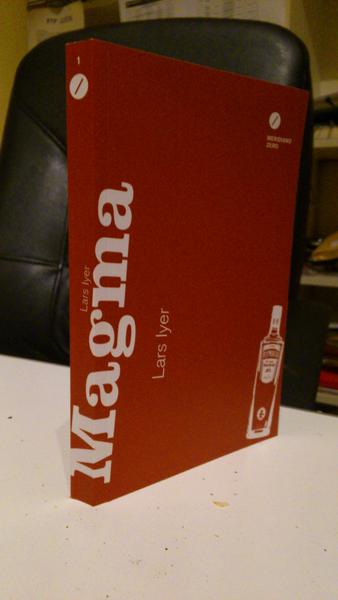
Spurious, in Croatian, as Mudrovanje, from Edicije Božičević (Zagreb, 2012). Translated by Marijana Bender Vranković and Nikolina Fuštar. The novel has been given the subtitle, Što je zabavnije od intelektualnog mudrovanja?, What's more fun than intellectual arguments? The title can be translated as Weaseling.
Category: Uncategorized
The British Society for Phenomenology 2013 Annual Conference
Remembering the Impossible Tomorrow: Italian Political Thought and the Recent Crisis in Capitalism
5th– 7th April, 2013
St Hilda’s College Oxford
During Marx’s time radical thought was formed from a convergence of three sources: German philosophy, English economics, and French politics. In the introduction to Radical Thought in Italy: A Potential Politics (1996) Michael Hardt argued that these tides had shifted, with radical movements drawing from French philosophy, US economics, and Italian politics. More recently, Matteo Pasquinelli has argued that ‘Italian theory’ has attained an academic hegemony comparable to that held by French philosophy in the 1980s.
But despite the proliferation of analysis and organizing drawing from and inspired by the history of autonomous politics in Italy, where are these voices today? In 2012, if you listened to the mainstream politicians and economic experts and no-one else, you would hardly know that there was any financial crisis in 2008. You might have a faint recollection that for a brief moment alternative voices were heard in the media, but now it as if nothing at all had happened. The waters that once had parted have now engulfed us again. It is the same voices articulating the same tired ideas as the whole of Europe slides into the nightmare of austerity, despite the fact they do not appear to have any relation to reality, and even those who speak them seem exhausted and worn out.
For some time now, many of us have noticed that there have been different voices, and they began speaking many years before 2008 warning us of an impending disaster. These voices were coming from Italy. Perhaps because of their own experience, the radical Italian thinkers never believed the logic of the market could solve its own problems or that life and capital were one and the same. Our hope is to draw from this history as well as listen to some of the new generation of Italian political thinkers, to share their ideas, offer an alternative diagnosis of the present, and perhaps even a suggestion of what different future might look like.
Confirmed Speakers:
Dario Gentili
Paolo Do
Federico Chicchi
Christian Marazzi
Anna Simone
Franco Berardi
Tony O’Connor
Sinead Murphy
Franco Barchiesi
Full programme details and registration forms can be found at the society's website http://britishphenomenology.org.uk/
Any issues or questions concerning registration please contact wlarge@glos.ac.uk
And now at last the Earth was dead. The final pitiful survivor had perished. All the teeming billions; the slow aeons; the empires and civilizations of mankind were summed up in this poor twisted form—and how titanically meaningless it had all been! Now indeed had come an end and climax to all the efforts of humanity—how monstrous and incredible a climax in the eyes of those poor complacent fools in the prosperous days! Not ever again would the planet know the thunderous tramping of human millions—or even the crawling of lizards and the buzz of insects, for they, too, had gone. Now was come the reign of sapless branches and endless fields of tough grasses. Earth, like its cold, imperturbable moon, was given over to silence and blackness forever.
The stars whirred on; the whole careless plan would continue for infinities unknown. This trivial end of a negligible episode mattered not to distant nebulae or to suns new-born, flourishing, and dying. The race of man, too puny and momentary to have a real function or purpose, was as if it had never existed. To such a conclusion the aeons of its farcically toilsome evolution had led.
— H.P. Lovecraft and R.H. Barlow, Till A’ the Seas (Via Toward the Creative Nothing)
Above, an A to Z of Spurious I wrote to introduce the novel.

Publisher's page for Exodus.
Tyler on the recipe for Spurious.
Lots of reviews of Spurious.
Spurious gives Bluestocking Russian Novel Depression Disorder.
Mad Dog gives Spurious zero stars.
Exodus, at Amazon UK, now has a blurb. Release date: 14th Feb UK, 29th Jan USA.
Planning a book tour of New York and Boston in mid Feb.
The Student Union bar. This is where he used to drink as a postgraduate student, W. says. It's where he learned to drink, he who had been near-teetotal before – and to smoke, he who had never smoked a cigarette in his life, with his fellow postgraduates.
Do I have any sense of what was like to feel part of a generation?, W. says. Can I understand what it was to have something expected of you, to have faith placed in you? How can I grasp what it meant to have a sense that what was happening could have done so onlythere and then - that the conditions were right for something to begin, really to begin?
Did they think they could change the world?, I ask him. Not the world, but thought, W. says. They thought they could change thinking. Thought they were the beginning of something, a new movement. Thought they augured what Britain might become: a thinking country, just as France is a thinking-country, just as Germany was a thinking-country.
This is where they spoke, and of great things. This is where theyspoke - can I even understand what that means? To speak, to be swept along by great currents. To be borne along, part of something, some ongoing debate. And for that debate to have stakes, to matter. For thought to become personal, a matter of where you stood in the most intimate details of your life. Ah, how can he convey it to me, who has never known intellectual life, intellectual friendship? How to one who barely knows what friendship means, let alone the intellect?
A life of the mind, that's what they'd chosen. A life of the mind for postgraduate students from all over Britain, and therefore a kind of internal exile. Because that's what it means to be a thinker in Britain: a kind of internal exile. They turned their backs on their families, on old friends. On the places of their birth. They'd turned from their old life, their old jobs, old partners. They'd travelled from the four corners of the country to be here, to arrive here, to be reborn here. Essex, Essex: what joy it was in that dawn to be alive …
This is where they spoke, says W. very insistently. Do I know what it means to speak? This is where they argued. Do I know what it means to argue? This is where they fought in thought. This is where they loved, too. The Student Union Bar: this is where thought was alive, thought was life, thought was a matter of life and death …
This is where they spoke. Voices trembled. Voices were raised. They laughed, and the laughter died away. Did they weep? No doubt there was weeping. No doubt some wept. This is where they promised themselves to thought. This is where they signed the covenant …
It was like serving together in a secret army. Even now, when he meets them, the former postgraduates of Essex, he sees the sign. Even now, it's clear; they are marked – they were marked then. Thought was life. Thought was their lives. They were remade in thought's crucible. They flared up from thought's fire.
They learned to read French thought in French, German thought in German. They studied Latin and ancient Greek. Imagine it: a British person reading ancient Greek! They crossed the channel and studied in Paris. They plunged into Europe and studied in Rome. They visited great archives. They read in great libraries.
They were becoming European, W. says. Do I have any idea what it meant: to become European. Some of them even learned tospeak other languages. Imagine it: a British person speaking French. Imagine it: an Englander in Berlin, conversing in German …
They went en masse to a two-week conference in Italy. Imagine it: en masse, British postgraduates at a two-week conference in Italy. They played chess in the sun, and drank wine until their teeth turned red. Italy! The Mediterranean! Who among them had any idea of Italy, of the Mediterranean? Who who had ever been to Italy, or to the Mediterranean?
The sun burned them brown. Their pallid British bodies: brown. Their teeth red. The sun turned them mad. They thought as Van Gogh painted: without a hat. Hatless, in the full sun, they became madmen and madwomen of thought.
Essex broke them. Essex rebuilt them. Essex broke their Britishness, their provincialness. Essex gave them philosophy. It gave them politics. It gave them friendship, and by way of philosophy, by way of politics. They were close to Europe, terribly close. Like Hoelderlin's Greece, Europe was the fire from heaven. Like Hoelderlin's Germany, Britain was to be set on fire by heaven.
Ah, what happened to them all, the postgraduates of Essex? What, to the last generation – the last generation of Essex postgraduates? Some got jobs. Some found work in obscure corners of Britain (where else could they find work but in obscure corners?). Some went abroad, back to Europe, back to the heavenly fire.
Some fell back into Britishness – fell into the drowning pool of Britishness. Some drowned, gasping for air, finding no air, in Britain. Hadn't they seen too much? Hadn't they learnt what they lacked? Hadn't they a sense now of great thought, of great politics? Hadn't their skies been full of light, of the heavenly fire?
Exodus will be published in the UK on the 14th Feb 2013, and in the USA on the 29th Jan 2013, according to Amazon. It seems to have gained a (probably provisional) blurb as well.
Comment I made in an interview coming out next year, when asked about the comparisons critics have made between my work and Beckett's:
Who wouldn’t be flattered to be compared to Beckett? There are similarities indeed between my trilogy and Beckett’s Godot: both concern a pair of bantering frenemies, eternally wavering between hope and despair. But my novels are more fixed in a particular place and a time than Beckett’s fiction. They’re part of a postmodern age, an age of mass media, in a way that Beckett’s are not. My characters surf the ‘net and play computer games. They read gossip magazines and watch trash TV. These are not incidental details. My characters are very much on our side of the great mountain range of modernism.
I would make a similar claim with respect to the flattering comparisons which have been made between my work and Thomas Bernhard’s. My characters, unlike his, are engulfed in ‘low’ culture. They experience the distance between the contemporary world and the life of the mind much more acutely. The intellectual pursuits of W. and Lars are that much more absurd, that much more anachronistic, because they are undertaken in no supporting context whatsoever. Bernhard satirises Viennese high culture; but in Britain, there is no high culture to satirise. W. and Lars are almost alone in their interest in philosophers like Rosenzweig or Hermann Cohen. The thinker-friends they admire are likewise entirely cut off from contemporary British life. There is pretty much no interest in Britain, academic or otherwise, in the figures W. and Lars venerate.
W. and Lars remind me of Roberto Bolaño’s quixotic characters in The Savage Detectives, who are dedicated to living a poetico-political life – the life of Rimbaud or the Surrealists, the life of the Beat Generation – in a world in which poetry and left-wing politics are utterly irrelevant, and apocalypse waits round the corner. The story I tell of the lost generation of former Essex postgraduates reminds me most of all of the diaspora of Bolaño’s Visceral Realists. W. and Lars are as quixotic, hopeful and deluded as Bolaño’s Robert Belano and Ulysses Lima, driving into the desert. But W. and Lars are not even part of a movement, as Bolaño’s characters were. They’re quite alone… As alone as Beckett’s Vladimir and Estragon, albeit in very different way.
(I'll post the full interview next year.)
I will be using this blog only for quotations as well as publicising details of events in which I am involved, reviews, etc.
I am writing a new novel here.
Spurious and Dogma will be coming out in Turkish, published by a new publishing company founded by the members of Kolektif Atolye, a design and architecture company.
Spurious will also be coming out in Italian, from the publisher, Casa Editrice Odoya.
A 40 minute video of me reading from Dogma at Northeastern University, Boston.
<I'll put a permanent copy of this review up here, since it disappeared from the site recently …>
Dogma by Lars Iyer
Publisher: Melville House Publishing
Publication Date: February 2012
ISBN: 978-1612190464
Paperback, $14.95
The United Kingdom has a Thomas Bernhard, and his name is Lars Iyer. Dogma is the second novel in a trilogy that began with Iyer’s first novel Spurious. It is the story of two Kafka-obsessed windbag British intellectuals, W. and Lars, on a mission to devise and hawk an odd, spartan meta-philosophy they call Dogma. W. is a hardheaded and hyperbolic Jewish professor who spends much of his time devising eloquent ways to insult his colleague Lars, a slovenly and depressed Danish Hindu with an inexplicable obsession with the mysterious Texas blues musician Jandek. The two are unabashedly referential, pulling inspiration from (and speaking constantly of) numerous avant-garde artists and directors: Dogma is a reference to filmmaker Lars Von Trier’s manifesto Dogme95. W. seems to be constantly projecting Werner Herzog’s film Strozsek on a wall in his house. They quote Bataille, Pascal, Leibniz, Rosenzweig, and Cohen. Dogma is hilarious and bleak and loaded with illuminating, brilliant passages, and Iyer’s rapid-fire staccato prose is well-suited to the task. For those who like their dark, difficult books to be funny.
From Hey Small Press.
Self-criticism [is] clearly only the refusal of criticism by the other, a way to be self-sufficient while reserving for oneself the right to insufficiency, a self-abasement that is a self-heightening.
from Blanchot's The Unavowable Community (via)
Vote for Dogma in the Guardian Not the Booker prize!
Dogma is on the longlist for the award, but now needs to get onto the shortlist. Voting is open until midnight on August 9th.
Article on books and blogging at The Star.
Away until early August. Exodus will be published on 26th Feb 2013, and is available for pre-order at Amazon UK/ Amazon USA.

RTE1 radio interview from May 30th.
Letters and Sodas reviews Dogma.
Bonalibro on Dogma and related things.
Pálido Fuego will will publish a Spanish translation of Spurious next year.
FronteiraD publish my manifesto, in Spanish.
The great Enrique Vila-Matas responds to the manifesto, in El Pais.
Rough translation of Vila-Matas's piece (thanks Ellie!):
He says he was recently at a signing alongside a young guy who had written a book called 'A guide for bald people', and asked him what it was about. The guy unashamedly said 'it's a joke book', at which point Vila-Matas realised that he was a TV star, and that all the people queueing were there to see him. At one point this guy turned to Vila-Matas and said 'I'm here so they can see me'. And Vila-Matas thought: 'precisely.' At the exact moment that writers start to be 'seen', everything is lost.
He started thinking about the degradation of literature over the centuries, and how it's all come to this. Then he says that the end of literature is the central axis of 'Nude in your hot tub' by the young British novelist Lars Iyer. Then he summarises Lars's essay, pretty directly, so I won't translate that.
Vila-Matas says that the problem is that all people who write these days are called writers, though there's nothing else linking a writer of joke books to a writer in the old sense. Some try to explain this collapse by talking about writers' abandonment of moral responsibility, but that argument is insufficient. Though it's true that most writers today work with rather than against capitalism and market forces, it's also true that liberal democracies, by tolerating and absorbing everything, make texts useless, as dangerous as that may seem.
Everything's really already over when it comes to literature, he says, though thankfully you can still qualify that statement. Prose now is a commodity, and so, though interesting/distinguished/respected, it's irredeemably insignificant. But we still look for ways out, because now and again a writer comes along who captures the gravity of the moment, whose writing is absurd, exasperated, sick, but also authentic. These people are crazy, maniacs, the heirs of yesterday's hopeless misanthrope writers, but their works are honest and have a liberating power.
Some of these great writers: Beckett, Bernhard, Bolano. Talks about Beckett's irony, his characters' success in failure.
He quotes Lars on Bernhard. Says that losers making music for losers also points to literature's chance of survival.
Then he says:
I'm listening to you, reader, and I won't deny that the party's almost over and that the black sky is indifferent to us all; but imagine, for a moment, that you take this last path that's left to literature. You're with the people of your own music at the last frontier, lost in the Sonoran desert, for example, at the end of all searching, or in Gatsby's gothic library, and your name is Owl Eyes and you're that guy with the thick lenses who wanders around dazed after discovering to his shock that Gatsby's books aren't fake.
Let's also suppose that there's a full moon and banjos in the garden.
"'Can't you see them?' you say. "I've checked. They're real."
Unexpected phrases like this, although charged with an exaltation at survival, make up the disturbed music of losers: phrases that are like soft, silent squalls, uttered for uncertain times, though not as uncertain as they would have us believe.
Brave Little Books reviews Spurious.
I'm speaking at the HowTheLightGetsInFestival in Hay-on-Wye on Weds and Thurs next week. It's not part of the Hay-On-Wye literary festival, but its own thing – informal, small-scale and quite relaxed. There's a small fee for each of the following events.
Wednesday 6 June 2012, 5:00pm. Venue: Lower Gallery
I'm speaking at the HowTheLightGetsInFestival in Hay-on-Wye on Weds and Thurs next week. It's not part of the Hay-On-Wye literary festival, but its own thing – informal, small-scale and quite relaxed. There's a small fee for each of the following events.
Wednesday 6 June 2012, 5:00pm. Venue: Lower Gallery
Tea, Cake and Philosophy
I'll be reading from Dogma, and speaking about the topic of dialogue in philosophy.
Thursday 7 June 2012. 10:30am. Venue: Globe Hall
Philosophy Session: Authors in the Age of Celebrity
Scott Pack, Lars Iyer, Elaine Feinstein. Gabriel Gbadamosi chairs.
Reports of the death of the author have been greatly exaggerated. They’re back, and they’re in the news, with fans queuing round the block at signings. Do punditry and promotion make writing a viable profession or distract from the business of writing? Should writers be read but not seen?
Digital novelist and Spurious blogger Lars Iyer, former Head Buyer for Waterstones and HarperCollins publicist Scott Pack, and prize-winning poet Elaine Feinstein greet their public.
Thursday 7 June 2012. 5:30pm. Venue: Globe Hall
Philosophy Session: Tomorrow's Word
Leo Robson, Lars Iyer, Joanna Kavenna. Gabriel Gbadamosi chairs.
What fresh possibilites await the future of the contemporary novel? The 20th century saw Joyce, Beckett and Woolf rewrite the rule book for fiction. But after a glance at the Booker Prize list, you could be forgiven for thinking the revolution had never happened. Was experimental fiction always a flash in the pan, or are we on the cusp of a new period of innovation and discovery?
Philosopher, novelist and blogger Lars Iyer, Orange prize-winning novelist Joanna Kavenna, and New Statesman and FT critic Leo Robson imagine the future of fiction.
Thought is Dread
We think with our tears, with our sadnesses, W. says. We think from our humiliations, our desperations …
Thought is the hangman, our hangman, W. says. Thought has its nooses ready, just for us.
Really, thought is a kind of assault, W. says.
To think is to stray. To think is to err greatly: who was it who said that?, W. wonders. Well, there's erring and erring. There's straying and straying.
In the end, thought is dread, W. says. It is indistinguishable from dread.
A Spital Tongues Gargantua
‘When do you work?’, W. says. ‘When do you have ideas?’ But he knows the answer. I am too busy to work, I tell him. I am too occupied to have ideas.
He knows what I do all day. He knows I’m busy with bureaucracy and administration. But what about my evenings?
He sees me, in his mind’s eye, W. says, opening a bottle of wine in the squalor of my flat after a day at work. He sees me, booting up my laptop, getting ready to write.
But that’s my problem!, W. says. I think that writing about ideas is the same as having ideas, when in reality they are entirely different. You have to stop writing to have an idea, W. says. You have to pause and wait.
Of course, it’s worse for me when I do stop writing, W. says. It’s worse when I collapse into my bed and try to sleep. He pictures me, staggering around my flat in the early hours, preparing for bed. He sees me, ranging around my flat like the abominable snowman, my dressing gown flapping around me …
‘You can never sleep, can you? You’ve never been able to sleep’, W says. He sees me, lying sleepless in bed, full of great paranoid imaginings about the way I think they’ll sack me. He sees me, lying there, quite panicked, fearing that I’ll be sent back to the dole queue. And he sees me, falling asleep at last, collapsing into unconsciousness at last, just as dawn breaks, and the birds start singing, just as, at the opposite end of the country, W. is waking up, ready to begin his studies. He sees me, dreaming fitfully about working out my notice and exit interviews. He sees me, mouthing the words, No!, No!, in my half sleep … And he sees my eyes open again, the Leviathan awake, rolling out of my bed like a Spital Tongues Gargantua …
Brilliance
Neat Plymouth gins on ice by the canal, musing on our failure.
There are some thoughts that will be forever beyond us, W. says. The thought of our own stupidity, for example; the thought of what we might have been had we not been stupid. The thought of what he might have been, W., had he not been dragged down by the concrete block of my stupidity … The thought of what I might have been, had my stupidity simply been allowed to run its course … W. shudders.
Oh, he has some sense of what we lack, W. says. More than I have, but then he's more intelligent than I am. He has some sense that there's another kind of thinking, another order of idea, into which one might break as a flying fish breaks the surface of the water. He knows it's there, the sun-touched surface, far above him. He knows there are thinkers whose wings flash with light in the open air, who leap from wave-crest to wave-crest, and that he will never fly with them.
He lacks brilliance, that's his tragedy, W. says. There is a dimension of thought, another dimension of life, which he will never attain. The murk of his stupidity has a gleaming surface … He half-understands, half-knows; but he doesn't understand, he doesn't know.
But isn't that what saves him?, W. says. For if he had understood, really understood, how immeasurably he had failed, wouldn't he have had to kill himself in shame? If he had known, really known, the extent of his shortcomings, wouldn't his blood have had to mingle with the water?
Then again, if he really understood, he wouldn't be stupid, W. says. To know, really to know, would mean he had already broken the surface.
A Krasznahorkai of Philosophy
We mustn’t be afraid to see our world in cosmological terms, W. says. In religious terms. The language of apocalypse is wholly appropriate for these times.
That’s what Krasznahorkai understands, W. says. It always amazes him, my inability to read Krasznahorkai. Didn’t he send me his own copies of The Melancholy of Resistance, and War and War? Didn’t he send me email after email, encouraging me to read them?
I didn’t get far with The Melancholy of Resistance, I told him. There’s nothing in War and War for the reader. The books are too boring, I told him. Boring!, W. exploded. Life is boring!, he says. Literature is not a celebrity magazine, he says. It should be boring.
W. has always thought that Krasznahorkai was the closest of contemporary authors to me. – ‘Except he has talent’. I’ve seen Béla Tarr’s adaptations of Krasznahorkai’s books, of course. W. forced me to watch them. But the books themselves … They’re too hard, I told W. The sentences are too long.
Hasn’t he dreamt that I could become a Krasznahorkai of philosophy, just as he could become a Béla Tarr of philosophy? Hasn’t he dreamt that, drawing from my Krasznahorkai-like blog posts about my life in the suburbs, my life in the warehouse, my life with damp and my life with rats, that he might write a Béla Tarr-like philosophy?
Dogma reviewed at The Answer is Probably No.
 Lars Iyer's Blog